The Newest, Cutest Baby Animals from the World's Zoos & Aquariums

Category: Rhino

  • ,

    6676_10151929506916124_164988910_n

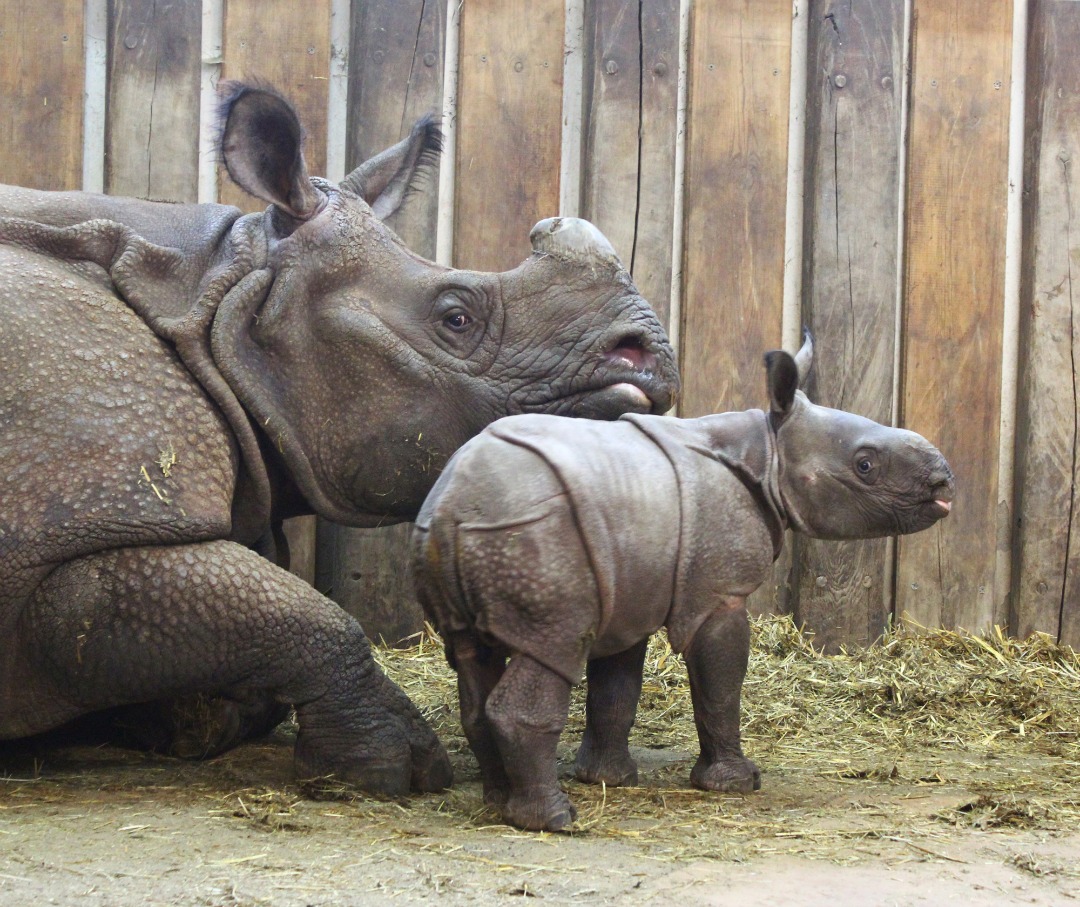
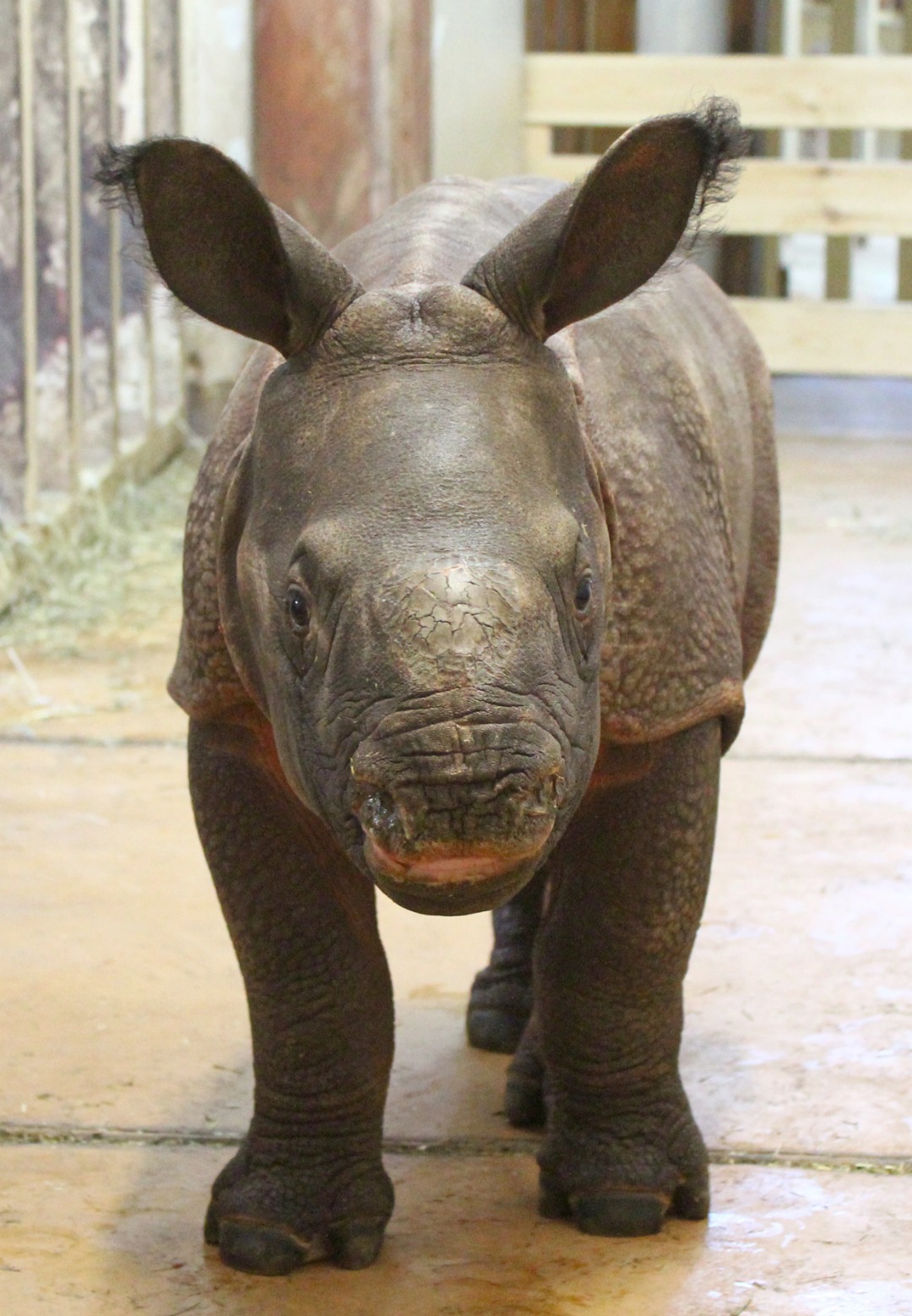
    Mother’s Day Came early for an endangered Indian Rhinoceros at Tampa’s Lowry Park Zoo. On May 9th—one day before her own birthday, and three days before Mother’s
    Day—an Indian Rhinoceros named Jamie gave birth to a male calf. The new calf has been
    given the Indian name Jiyu, meaning “compassionate friend”, by the Zoo’s Asian
    animal care team. Mother and calf are spending time together
    off exhibit for the newborn’s safety and for privacy in bonding. After some heavy rains, the two-week old calf loves playing outside in mud puddles.

    “This calf represents our third successful offspring in support
    of the Indian Rhino management program in North America,” says Dr. Larry Killmar, the
    Zoo’s vice president of animal science. Jamie’s first offspring, a female named Jaya born in 2009, now resides at Tanganyika Wildlife Park in Wichita and the second offspring, a male named Jahi born in 2011, now resides at Central Florida Zoo in Sanford. All three calves were sired by a male rhino named Arjun.


    964171_10151920927206124_124787965_o

    Indian rhino Jiyu (1)

    Indian rhino Jiyu (2)
    Photo credits: Tampa's Lowry Park Zoo / David Parkinson 

    Tampa’s Lowry Park Zoo participates in the Association of Zoos and Aquariums (AZA) Indian Rhinoceros Species Survival Plan (SSP), designed to support the conservation of select wildlife species at risk of extinction. Counting the new male calf, there are just fifty four Indian rhinos in AZA-accredited institutions, with an estimated wild population of no more than 2,850.

    Learn and see more after the fold!

    (more…)

  • ,

    White Rhino Calf_15.5.13_credit Leonie Saville_thumb for online

    A year ago, staff at Taronga Western Plains
    Zoo
    grieved for the loss of four White Rhinos that had contracted an
    illness. But this year on May 14th, staff arrived to find a wonderful early morning
    surprise. Mopani, the only female White Rhino to survive the illness, had given
    birth to a little male. Only hours old, the calf was still a bit wobbly on his
    feet as the news spread around the zoo.

    “Mopani is an amazing animal, having actually
    contracted the illness last year whilst carrying her calf. To come through that
    and give birth to this healthy calf is just remarkable,” said Senior White
    Rhino Keeper, Pascale Benoit. “Everyone is just over the moon with the arrival
    of the White Rhino calf."

    Mopani, a gentle and caring first-time
    mother, is doing her job well. The calf will nurse from his mother for two
    years until he is weaned. While the male rhinos do not take part in raising the
    young, the father Umfana also deserves congratulations, as this is his third
    calf and second male.

    White Rhino Calf_15.5.13_credit Leonie Saville (1)

    White Rhino Calf_15.5.13_credit Leonie Saville (4)

    White Rhino Calf_15.5.13_credit Leonie Saville (5)

    White Rhino Calf_15.5.13_credit Leonie Saville (3)
    Photo credits: Taronga Western Plains Zoo

    See a video the little male calf and his mother: 

    See and learn more after the fold.

    (more…)

  • ,

    923053_10151931066883136_1723372205_n

    Dublin
    Zoo
    is celebrating one of its most exciting arrivals of 2013: a male Southern
    White Rhinoceros calf. The calf, who is yet to be named, was born to mother
    Ashanti on April 26 and weighs approximately 110 pounds (50 kg). 

    931180_10151931066963136_63540094_n

    248067_10151931066903136_598424786_n

    302952_10151931464638136_2014068806_n
    Photo Credit:  Dublin Zoo

    The newborn is Ashanti’s third calf
    and is another significant success for the European
    Endangered Species Programme established to assist the survival of the near
    threatened Southern White Rhinoceros.

    Scientists estimate that only 20,000 Southern
    White Rhinos exist in the wilds of South Africa, Namibia, and Zimbabwe.  They have been reintroduced into some areas
    where they had been eliminated.  The most
    significant threat to Rhinos is poaching: 
    Rhinos are killed for their horns, which are used in traditional medicine.

    See more photos of the Dublin Zoo's Rhino calf below the fold.

    (more…)

  • ,

    420733_10151428441488262_789927124_n

    After a 16 month wait, the Colchester
    Zoo
    announced the birth of a female Southern White Rhinoceros calf to female Rhino
    Emily on April 13.

    This is the first Rhino calf to be born through a
    natural mating at Colchester Zoo and is the first calf for Emily and male Rhino
    Otto. Curator Sarah Forsyth said, “Emily is
    proving to be a very protective but excellent mother and the calf is very
    healthy and already building a close relationship with her keepers.”

    164634_10151428441398262_660547340_n

    385941_10151428441688262_1477347544_n
    Photo Credits:  Colchester Zoo


    Zoo keeper Jo Row expressed the excitement of the
    staff. “This birth is brilliant news not just for Colchester Zoo but also for
    conservation. It is a great privilege to be a part of the life of this new
    arrival and we look forward to watching baby develop and grow!”

    The calf, which has not yet been named, will be on
    display for only short periods each day until she is introduced to the other
    members of the zoo’s Rhino herd.  She
    will not be mixed with her father, Otto, for 4-6 months.

    See more photos below the fold.

    (more…)

  • ,

    17223_10152391238326664_1160407917_n

    The biggest addition at Florida’s Lion Country Safari is
    just a week old:  a 155-pound female
    Southern White Rhinoceros calf is now on display in the Rhino maternity area of
    the drive-through safari. 

    Born on April 6, 2013 to mom Bloom after 16 months of
    gestation, the baby has been named Anna, after Rhino conservationist Anna Merz,
    who passed away on April 4. Merz was a founder of The Lewa Conservancy, which
    was established to conserve Rhinos in Kenya and has since grown to protect many
    species of African birds and mammals.

    Anna and Mom

    Anna relaxing

    Anna by mom's horn
    Photo Credit:  Lion
    Country Safari

    Lion Country Safari is home to 14 Rhinos and has produced 33
    Rhino offspring since 1979 as a participant in the Association of Zoos &
    Aquariums’ Species Survival Plan. 

    Of the five extant species of Rhinos (White, Black, Indian,
    Sumatran and Javan) the White Rhino is the most abundant, with approximately
    20,150 alive today.  However, all five
    Rhino species are in peril.  The most
    significant threat to Rhinos is the trade in Rhino horn, which is used for
    traditional Asian medicine and as dagger handles in some Middle Eastern
    countries.  Despite international
    protections and treaties, demand for Rhino horn continues to escalate.

    See more photos of Anna below the fold.

    (more…)

  • ,

    SWRhinoBaby_001_LG

    On the afternoon of February 25th, the San Diego Zoo Safari Park welcomed the newest member of their East African Plains exhibit with the birth of a healthy male Southern White Rhino calf. The young boy has since been named Kayode, which means "he brings joy" in the African language of Yoruba. He is sure to do just that for the visitors who come to see him as the youngster is already showing lots of quirks and personality. "Kayode is a little tank, a very cute little tank, and he is showing lots of personality. He loves running and interacting with his mom, sticking out his tongue, and showing the buffalo in his enclosure he’s a rhino and he’s in charge," said the lead keeper at the San Diego Zoo Safari Park, Jane Kennedy.

    While Kayode was just an estimated 150 pounds when he was first born, this small stature, for a rhino that is, won't last long. In the first year of his life, Kayode will grow around 100 pounds each and every month. By the time he is full grown, he will be a massive 4,000-5,000 pounds.

    SWRhinoBaby_002_LG
    Photo credits (above): Ken Bohn / San Diego Zoo Safari Park
    Photo credits (below): Greg Pinter

    SDZ Rhino-3


    Although Kayode is his mother Kacy's first offspring, she has been a fantastic mom thus far. She has taken care to protect her son and make sure he never strays too far off in their expansive enclosure. In addition, where Kacy's experience lacks, the staff at the San Diego Zoo Safari Park more than makes up for it. Kayode is the 93rd Southern White Rhino calf born at the facility in its 41 years in existence, more than any other zoo in the world. In addition, Kayode is just the sixth 3rd-generation calf born at the zoo.

    See and learn much more after the fold!

    (more…)

  • ,


    Rhino cu

    Australia Zoo announced the birth of their second Southern White Rhinoceros calf, a baby girl. The calf, born February 7, is the first offspring
    for parents Inyeti and DJ. This is Inyeti’s first calf, and only the second
    rhino to be born at Australia Zoo and Queensland. According to keeper Renee Schier, the baby is making great progress. “We’re very excited to announce that the calf is healthy, strong and weighs between 45 – 50 kgs (99-110 pounds)."

    Southern White Rhinoceros are listed as Near Threatened by
    the International Union for Conservation of Nature (IUCN), due to poaching
    threats and illegal use of Rhino horn. There are approximately 18 – 20,000 Rhino left in the wild and another 780 in captivity. Australia Zoo is part of a regional co-operative program
    working with other zoos in Australasia to maximize breeding potential and
    genetic diversity of the White Rhino.

    Rhino mom noses

    Rhino angle w mom

    Rhino mom bum

    Photo Credit: Australia Zoo

    Despite arriving a little earlier than anticipated the baby is showing all of the normal signs for a healthy calf. Renee added, “We’re
    really happy with her progress. She is feeding and is quite active –
    she was walking within hours of the birth.”

    Here is a video of the baby that was made to announce a naming contest. The public was invited to submit names last week and now everyone is waiting for Terri Irwin, and her children Bindi and Robert to announce the name. 


    More pictures of mom and baby after the fold:

    (more…)

  • ,

    Greater One-horned Rhino San Diego Zoo Safari Park 4

    Keepers at the San Diego Zoo Safari Park gave five-week-old Rhino calf Shomili, or Mili, as keepers call her, a bottle feeding as part of her daily nutritional routine this morning. Animal care has been giving the Greater One-horned Rhino calf bottle feedings since first time mother Sundari has not been able to give her calf all of the nutrition that she needs.

    Sundari is a young mother and her milk is not coming in the way keepers expected. Animal care staff made the decision to give a supplemental bottle feeding twice a day to make sure Shomili gets the nutrition a young, growing Rhino requires.

    Greater One-horned Rhino San Diego Zoo Safari Park 1


    Greater One-horned Rhino San Diego Zoo Safari Park 3

    Safari Park keepers give a little TLC to a Greater One-horned Rhino calf, in the form of a soothing mud bath.


    Greater One-horned Rhino San Diego Zoo Safari Park 2
    Photo credits: Ken Bohn / San Diego Zoo Safari Park


    Weighing 128 pounds when she was born December 13, Mili now weighs 245 pounds and is developing right on track, keepers report.

    Related articles

    Elina: Double the Fun: Two Rhinos Born at Knowsley Safari Park
    Trio of Furry Bellies: Three Transvaal Lion Cubs Born at Honolulu Zoo
    Panda Cub Has a Ball at His Exam
    Two More Rhino Calves Bolster Conservation Efforts
  • ,

    1

    On Christmas day, Warsaw Zoo welcomed this newborn Indian Rhinoceros with great excitement, because he is the first ever rhinoceros born in a Polish zoo. At birth he weighed in at 121.5 pounds (55 kilos) and was named Byś. His parents are Shikari (born in 2006 in
    Stuttgart) and Kuba (born in 2004 in Berlin).

    In the wild, it's estimated that only about 3000 Indian
    Rhinoceros remain. They are among the rarest mammals in the world today. While loss of habitat is a factor, poachers are the largest threat to these animals, who, tragically, hunt and kill them mostly for their horns. Conservation efforts are essential to ensure this species survival.

    Andrzej Zielinski, from the zoo's Culture Department, said, "The birth of this rhinoceros is one
    of the most important events in the history of Polish zoos."

    3


    2

    Photo Credit: Warsaw Zoo/Ewa Ziółkowska

    Little Byś will not go into the outdoor habitat until the spring; until then, zoo guest can see him with his mother behind the scenes thanks to indoor cameras and exhibit screens.  Here he is at bathtime, which the little one enjoys every day.

  • ,

    Rhino5

    Two White Rhinoceros calves – one male and one female – were
    born just two days apart at the Knowsley Safari Park.

    On November 7, female Piglet delivered baby Njiri and on November
    9, baby Thabo was born to 18-year-old Winnie. 
    Both calves were sired by 18-year-old bull Shako.  Piglet
    and Winnie were pregnant for 16 months.

    Rhino2

    Rhino8

    Rhino6

    The calves were given African names to celebrate their wild
    heritage.  Njiri means “warthog” and
    Thabo means “joy.”

    These calves are the 12th and 13th
    Rhinos to be born at Knowlsey Safari Park in the last ten years.  The park’s breeding program is managed by the
    European Association of Zoos and Aquaria’s (EAZA) European Endangered Species
    Programme (EEP).

    White Rhinos are hunted extensively in their native African
    home and are perilously close to extinction with only about 20,000 remaining in
    the wild.  Rhinos are often killed solely
    for their horns, which are sought on the black market.  The birth of these two calves is important to
    maintaining a healthy and genetically diverse population in zoos – which may
    one day be needed to augment the dwindling wild population.

    Photo Credits:  Knowsley Safari Park

    More photos below the fold!

    (more…)