The Newest, Cutest Baby Animals from the World's Zoos & Aquariums

Category: Wolf

  • ,

    3553_10151328460881594_699410695_n

    Kenyi, a British Columbian Tundra
    Wolf pup, has a new home after traveling across the country to the Colorado Wolf and Wildlife Center.  Born in Florida, Kenyi and his two siblings
    were unplanned, so there was not enough room for them to remain at their birthplace.

    544140_10151319267346594_1440771650_n

    305991_10151320186016594_792559818_n

    936203_10151334060926594_1019990003_n

    575454_10151333533141594_1705062585_n
    Photo Credits:  Colorado Wolf and Wildlife Center

    The sanctuary’s staff has already
    started introducing Kenyi to some of its resident wolves, albeit through the
    safety of a fence. 

    The Colorado Wolf and Wildlife Center
    is a sanctuary for a variety of canids, including Timber Wolves, Alaskan Wolves,
    Arctic Wolves, Mexican Grey Wolves, Swift Foxes, and Coyotes.  The sanctuary is accredited by the Association
    of Zoos & Aquariums (AZA). 

    As an AZA facility, the center supports conservation efforts by participating in Species Survival Plan
    programs for Mexican Grey Wolves and Swift Foxes.

     Related articles

    Maned Wolf Pups Romp in the Snow at Zoo Liberec
    UPDATE: Maned Wolf Pups Come Out of Hiding to Visit the Vet
    A Sneak Peek at Pueblo Zoo's Maned Wolf Puppies
  • , ,

    529857_478075368913559_1718579180_n

    Two Maned Wolf Pups born at the Czech Republic’s Zoo Liberec on January 10 had their
    first visit to the veterinarian this week to receive vaccinations and determine
    their gender.  The pair, a male and a
    female, was proclaimed in excellent health by the veterinary staff. 

    The pups, who were profiled on ZooBorns last
    month
    , weighed only about a pound (.5 kg) at birth, but they have rapidly
    gained weight.  At the exam, each weighed
    more than six pounds (2.8 kg). The pups are the first Maned Wolves ever born at
    Zoo Liberec.

    541374_478075385580224_1360974983_n

    299699_478075288913567_2137364315_n

    482406_478075365580226_1373709258_n

    522471_478075092246920_854143960_n
    Photo Credits:  Zoo Liberec

    Native to South America, Maned Wolves are unique among
    canids.  They are distinguished by long
    legs, a bushy mane which is erected when the Wolf is threatened, and a
    skunk-like odor.  Maned Wolves live
    solitary lives roaming the grasslands of central South America.  They eat small mammals as well as tubers,
    fruits, and sugarcane.

    Maned Wolves are listed as Near Threatened by the International
    Union for Conservation of Nature (IUCN), but in some parts of their range,
    notably in Uruguay, this species may be nearly extirpated (locally
    extinct). 


    Related articles

    Maned Wolf Pups Romp in the Snow at Zoo Liberec
    It's a Girl! Second Southern White Rhino Baby for Australia Zoo
    UPDATE! Prague Zoo's Baby Elephant Learning to Use Trunk
    Meet Zoo Wroclaw's Baby Giant Anteater!
  • ,

    Wolf Cubs3 cropped

    Five furry European Grey Wolf pups made their debut last week at Scotland’s Highland Wildlife Park.  Born on May 25 to mum Elara and dad Puika, the still-shy six-week-old pups are starting to explore their forested habitat, aptly named Wolf Wood.   It’s been 12 years since Wolves were born at the park.

    The pups’ genders are not yet known, but park officials have already decided to name one of the pups “Forty,” in honor of the park’s 40th anniversary.   

     “The pups, especially one particularly bold individual, are now beginning to wander around the large wooded enclosure, which does seem to cause their mother some anxiety,” said Douglas Richardson, Animal Collection Manager.  “The Park is visited by quite a number of people with a special interest in Wolves and it is hoped that this latest breeding success will generate further interest in this much-maligned species, especially as it is an animal that formerly roamed over most of the country.”

    Wolves were once common throughout Europe, but in the 1800s, they were eliminated in most of central and northern Europe.  Since then, Wolves have been reestablished in some parts of the region, despite threats from overhunting and poaching.  Today, the largest wild European Grey Wolf populations are in the eastern European countries of Poland and Romania, and in the Balkans.

    Wolf Cub1 cropped

    3 cubs cropped
    Photo credit:  Alex Riddell

  • Yip

    They were born on May 7, but these Arctic Wolf pups were just seen coming out of their cave by keepers for the first time at Knuthenborg Safaripark in Denmark.

    Just three puppies were spotted peeking their heads out at the edge of their den… but then came two more fuzzy little heads. "We are really happy", says Animal and Dissemination Manager for Knuthenborg Safari Park, Lisbeth Hoegh. "We had, at best, hoped for three pups, but there are five! Unusually large broods indicate a wolf-mother who works well in her role."

    The Arctic Wolf is also called the Polar or White Wolf, and lives in the northernmost regions of Canada and Greenland. They are related to the Gray Wolf. They are considered endangered, due to being hunted for their beautifully colored soft pelts, among other reasons. In the wild they are very scarce, and there are even fewer in captivity. 

    Billederafulve006

    Billederafulve003

    Billederafulve004

    Billederafulve014
    Photo Credit: Knuthenborg Safaripark

  • ,

    Trio

    The Great Plains Zoo in South Dakota announced the birth of three rare Red Wolf pups. There are only about 100 Red Wolves left in the entire wild population! Four-year-old mom Ayasha gave birth to a litter of three pups last month – two females and a male. They weighed less than a pound at birth and fit into the palm of a zookeeper’s hand. The zoo’s animal care staff monitored the birth through video
    cameras and continues to observe the new family.

    “These are important births to our zoo and to the survival of the entire Red Wolf population,” said Elizabeth A. Whealy, President and CEO of the Great Plains Zoo. “Red  Wolves are one of the world’s most endangered animals. These pups are important ambassadors for their species, and are helping to shine a light on the plight of these vanishing animals.”

    Just like human newborns, the pups will spend much of their time sleeping, eating and settling in with their mother. The pups are expected to be on exhibit, viewable by the public, in the next few weeks. The pups father Tamaska can be seen daily in the Red Wolf exhibit.

    Pup

    3
    Photo Credit: Great Plains Zoo

    Read more about Red Wolf Pups below the jump:

    (more…)

  • ,

    464852_10150826213229624_125282134623_9734535_1756458695_o

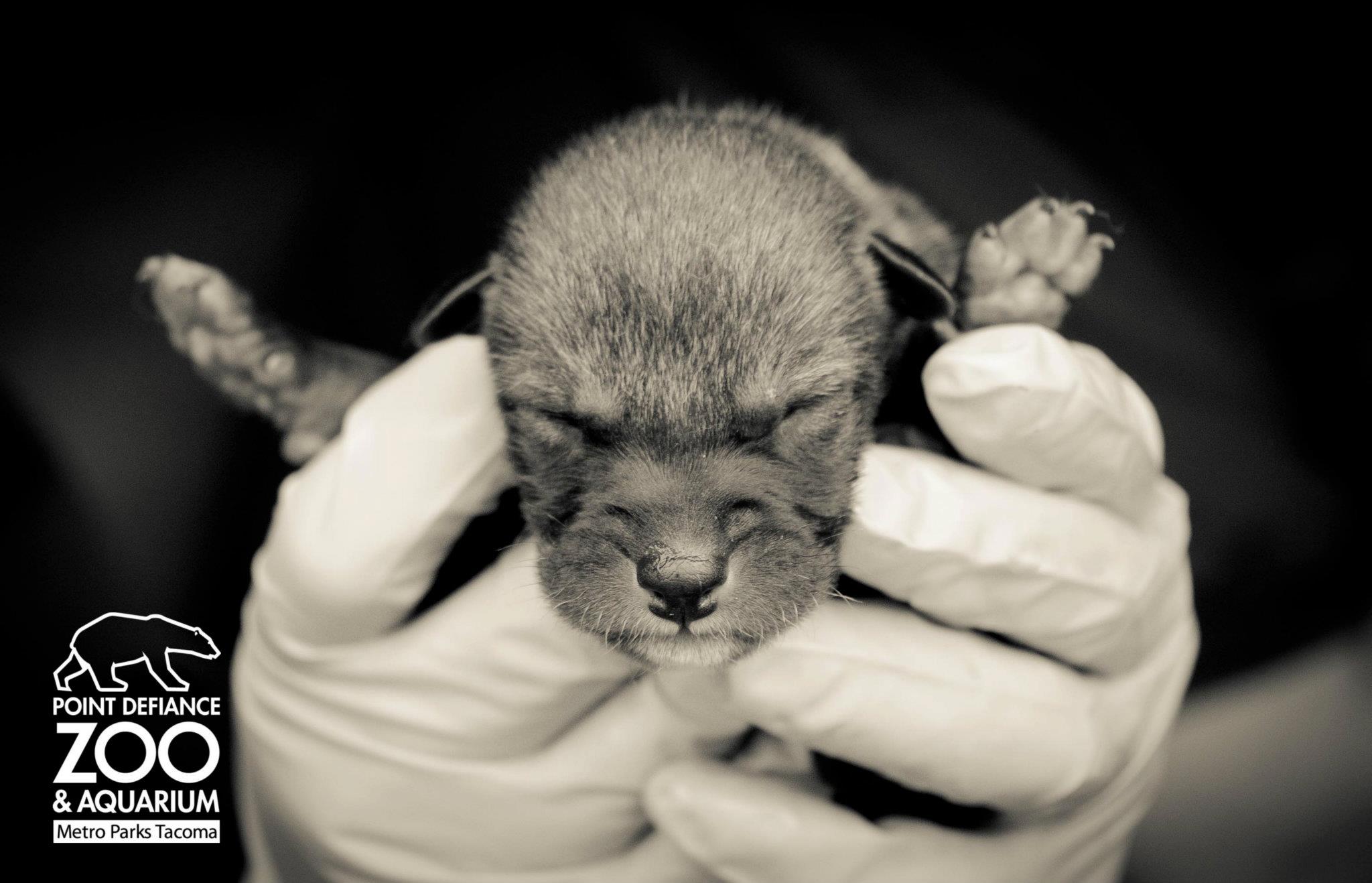
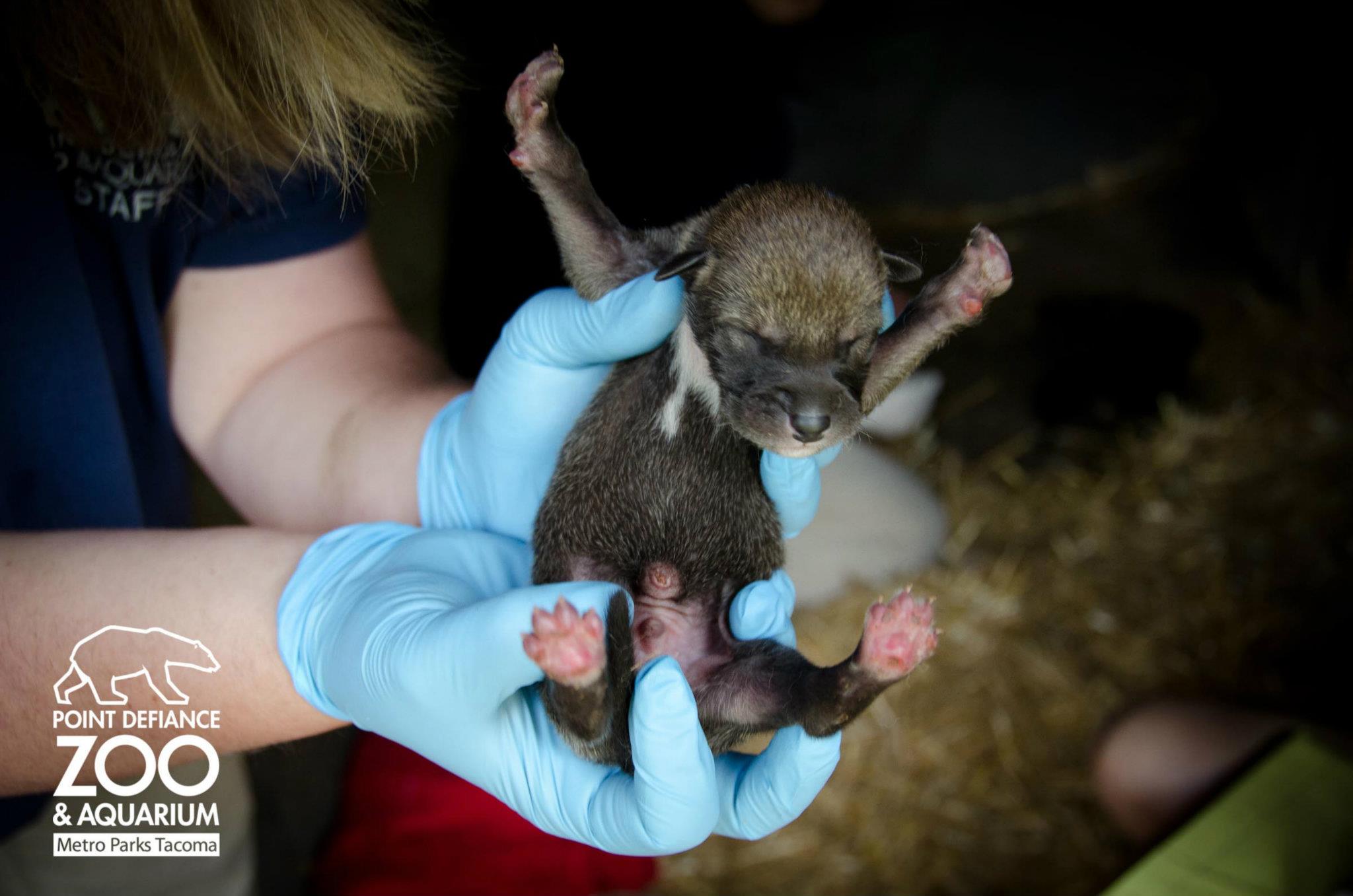
    ZooBorns strives to highlight the ways animals born at accredited zoos and aquariums can directly support vital conservation programs in the wild. Perhaps no effort better illustrates this than the Red Wolf Recovery Program, for which the Point Defiance Zoo & Aquarium is the flagship breeding facility.

    Hunted, poisoned and cut off from natural habitat, Red Wolves were formally declared extinct in the wild after biologists captured the remaining 17 wolves in the 1970s for an ambitious new pilot breeding program. Remarkably, 14 of the those wolves bred in captivity and by 1987 enough pups had been born for the US Fish & Wildlife to attempt reintroduction efforts.

    Today over 100 Red Wolves roam their native habitats in northeastern North Carolina. While this a far cry from the tens of thousands that once ranged from New England to Florida, it still represents a tremendous success, marking the first time a predator population has been rebuilt in the wild after being declared extinct in the wild.

    477263_10150826216334624_125282134623_9734546_1581522851_o

    457358_10150826216179624_125282134623_9734545_647563807_o

    On May 14, Point Defiance Zoo & Aquarium staff were delighted to welcome 8 critically endangered Red Wolf pups to mother Millie, an 8-year-old female, and father 9-year-old Graham. Millie is an attentive and protective mother, said Will Waddell, the zoo’s Red Wolf program coordinator, who also manages the nationwide Red Wolf Species Survival Plan and is part of the Red Wolf Recovery Team. 

    While these pups are first born on zoo grounds in 29 years, the program has produced hundreds of pups at off-site breeding facilities since its inception.


    460230_10150826214714624_125282134623_9734539_1407895726_o

    Zoo staff are working on a closed-circuit camera feed of Millie and her pups in their den so they might be viewable by the media and the public. They likely will come out of their den and into the exhibit in three to four weeks – a purely voluntary action – Waddell said.

    470789_10150826218914624_125282134623_9734552_398132010_oPhoto credits: Point Defiance Zoo & Aquarium

    Learn more about the Point Defiance Zoo's leadership in the Red Wolf Recovery Program and visit the program's official US FIsh & Wildlife page. For more info and photos, continue reading after the jump.

    (more…)

  • , ,

    National-Zoo-Maned-Wolf-Pups4

    Although 2012 has only just begun, the Smithsonian Conservation Biology Institute in Front Royal, Virginia (SCBI-FR), already has something to celebrate in the new year: the birth of four Maned Wolf pups Jan. 5. It is the first litter born at SCBI-FR in two years and will play an important role in helping researchers maintain a viable, self-sustaining population under human care.

    “Every pup born here helps us understand more about the biology of this incredible species,” said Nucharin Songsasen, an SCBI research biologist. “SCBI has a long history with the Maned Wolf, both in terms of studying the biology and maintaining the genetic diversity of individuals living under human care, as well as in conserving the animals in the wild.”

    National-Zoo-Maned-Wolf-Pups3

    National-Zoo-Maned-Wolf-Pups2

    National-ZOo-Maned-Wolf-Pups
    Photo credit: Lisa Ware, Smithsonian Conservation Biology Institute

    The four pups were born to mother, 8-year-old Salina, and father, 4-year-old Nopal, who was born at SCBI-FR. Maned Wolf pups have a 50 percent mortality rate in the first month, so keepers are monitoring them closely. This litter is particularly valuable because Nopal is the 10th most genetically valuable male among the 36 reproductively viable males in the Association of Zoos and Aquariums’ Maned Wolf Species Survival Plan, which matches animals across the country to ensure genetic diversity in the population. Seventy-two maned wolf pups have been born at SCBI-FR since 1975, and the facility currently has 12 wolves, including the pups. The National Zoo has two maned wolves on exhibit at the Cheetah Conservation Station.

    (more…)

  • , ,

    Dora and Diego, Maned Wolf puppies at the Houston Zoo

    The Houston Zoo is proud to announce the births of two rare Maned Wolf pups. Born December 30, the pups are being hand reared at the Houston Zoo's Denton Cooley Animal Hospital. "This is the first successful birth of Maned Wolves at the Houston Zoo in over 10 years," said Houston Zoo Curator of Carnivores and Primates Hollie Colahan. "The pups weigh just over 5 pounds now and are being cared for around the clock by Zoo carnivore and animal hospital staff," added Colahan. The pups are fed 6 times each day and were just introduced to solid food last week. Maned Wolves are not closely related with any other living Canid (wolf, dog or fox) and one study suggests that they may be the sole South American surivivor of the mass extinction of large Canids at the end of the last ice age. 

    Diego's weigh-in

    Diego does his best puppy dog eyes at the Houston Zoo

    Maned Wolves are native to the grasslands, savannahs and tall grass prairies of Brazil, Argentina, Paraguay, and Bolivia. The species once thrived and ranged throughout much of South America.Unlike other wolves that live in cooperative breeding packs, Maned Wolves are solitary animals. Little is known about their lives in the wild where their populations are increasingly threatened by habitat loss to agriculture.

    MUCH more cuteness below the fold…

    (more…)

  • Yesterday, zoo visitor Ulli J. snapped these pictures of a mother Arctic Wolf, also known as a Polar Wolf tending to her young. The Monde Sauvage Safari Park in Belgium is home to these North American natives. In the wild, Polar Wolf mothers leave the pack when they are pregnant to seek safe refuge for their cubs. It is not uncommon for her siblings to help care for these young while she finds food outside the den.

    4628721344_0451403222_o

    4628722300_239018912a_o

    4628721536_d44e376661_o

    4628118937_08bf9f2fc2_o

    4628119157_35bb8590f6_o
    Photo Credits: Ulli J.

  • ,

    Two of six endangered red wolf pups born at Lincoln Park Zoo on April 17 are on their way to North Carolina today where they will be released into the wild through the Red Wolf Recovery Program. The newborn pups will be placed inside the den of a pair of wild adult wolves that are currently nursing their own small litter of comparably aged pups. The wild wolves will become the zoo-born pups’ foster parents.

    LPZ100429_35 

    LPZ100429_20 

    LPZ100429_26 

    LPZ100429_11
    Photo Credits: Lincoln Park Zoo

    (more…)