The Newest, Cutest Baby Animals from the World's Zoos & Aquariums

Category: Wolf

  • ,

    1st-exam-media-1

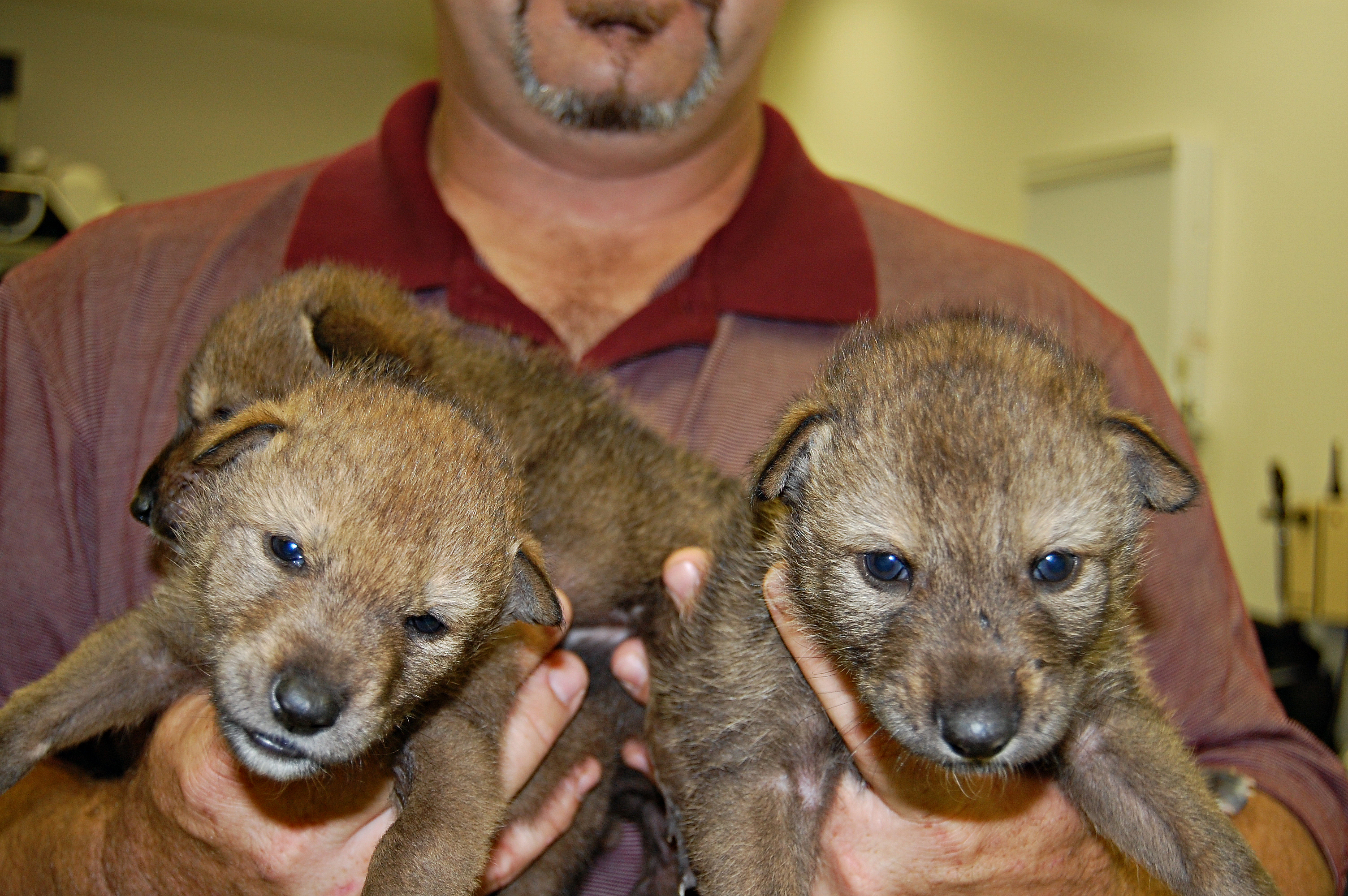
    Connecticut’s Beardsley Zoo is pleased to announce the birth of four critically endangered Red Wolf pups! Today, just 100 Red Wolves roam their native habitats in eastern North Carolina, and nearly 200 Red Wolves are maintained in captive breeding facilities throughout the United States. Because of this, the birth of four pups – two male and two female – represents a welcome increase in the overall scarce population.

    “We couldn’t be happier with how (the babies) are coming along,” stated Gregg Dancho, zoo director. “Both the Red Wolf mother and father are taking well to parenthood and the pups are just starting to venture out into the Wolf den for short periods of time.

    1st-exam-media-2

    Media-1

    Media-2

    Media-3

    Media-4


    Learn more about these rare pups below the fold…

    (more…)

  • ,

    10365946_10152172047108174_8626744923135281762_nThe NEW Zoo & Adventure Park in Wisconsin has some exciting news: six Red Wolf pups were born on May 22! All six pups are tucked away in the den with their mother, Mayo and father, Tasmaska.

    1381493_10152174137433174_8998201980460352967_n
    10418977_10152172047098174_5021345539006242778_n

    10390960_10152174137428174_331269782312835027_n
    Photo Credit:  NEW Zoo

    A quick veterinary exam on May 28 revealed that the litter contains four males and two females. All six pups appear healthy and are exhibiting age-appropriate behaviors.

    Mayo left the Western North Carolina Nature Center last fall to be paired with Tamaska under the recommendation of the Association of Zoos & Aquariums’ Species Survival Plan (SSP). The purpose of the SSP is to cooperatively manage populations of threatened and endangered animals in accredited facilities.

    Red Wolves are Critically Endangered, with only about 100 remaining in the wild and another 200 in captive breeding programs like those at the NEW Zoo and the Western North Carolina Nature Center. These Wolves one ranged throughout the Southeastern United States.  Today, Red Wolves are confined to a few wildlife refuges on the North Carolina coast. Though they are perilously close to extinction, the number of Red Wolves has increased since the 1970s.

    See more photos of the pups below.

    (more…)

  • ,

    1 wolf

    Denver Zoo in Colorado is celebrating the birth of three Maned Wolf pups, born on May 1. The unnamed triplets, two males and one female, were born to mother, Adrianna, and father, Inigo, and are the first of their species to be born at the Zoo since 2009. All three pups were just given a clean bill of health by zoo veterinarians. Though the pups are not yet old enough to explore the outside world on their own yet, Zoo visitors might catch glimpses of them as their protective mother totes them from den to den inside the Wolf Pack Woods exhibit.

    2 wolf

    3 wolfPhoto credit: Denver Zoo

    These are the first pups for both Inigo and Adrianna, who both arrived at Denver Zoo in September 2013. Inigo came from Texas’ Abilene Zoo, where he was born in December 2011. Adrianna arrived from Springfield, Missouri’s Dickerson Park Zoo, but was born at the Fossil Rim Wildlife Center, near Glen Rose, Texas in February 2012. The pair came to Denver Zoo as part of a Species Survival Plan recommendation from the Association of Zoos and Aquariums, which ensures healthy populations and genetic diversity among zoo animals. Fortunately, the couple has proved to be an excellent match.

    Maned Wolves resemble Red Foxes with long legs. Despite their reddish coloring and general appearance they are not related to foxes and despite their name, they are not members of the wolf family. The Maned Wolf is the largest wild dog of South America. Standing about three feet tall at the shoulder, their long legs enable them to see above the tall grass – an adaptation that helps them hunt for food and avoid predators. Unlike wolves, they do not form packs: they are solitary hunters, and guard terriotories with a monogamous mate. 

    See and read more after the fold.

    (more…)

  • ,

    W CU hero

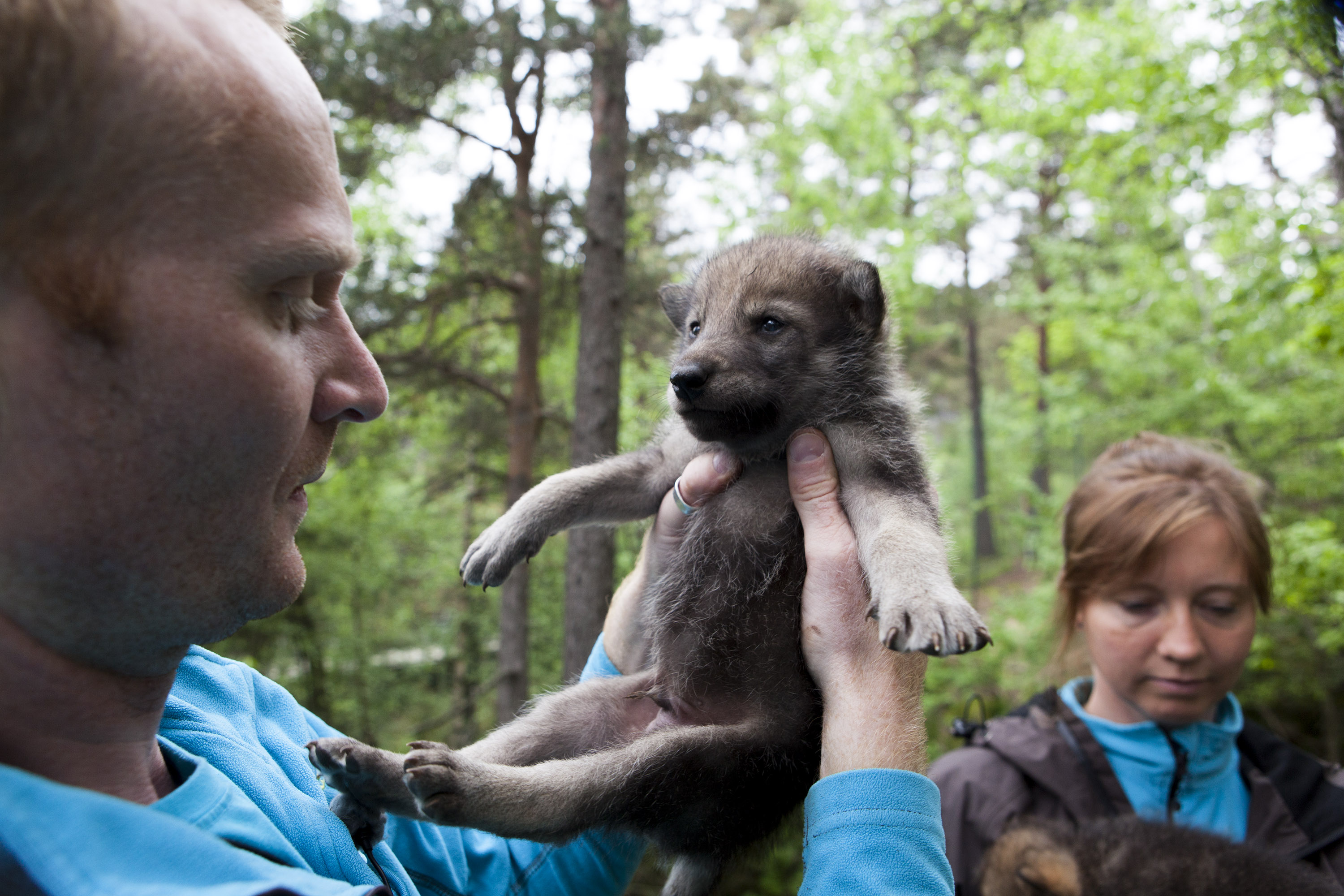
    Two Grey Wolf pups were born around May 20th at Norway's Dyreparken. On June 6, they got their health checkup. The sex of the pups was determined: one boy and one girl. The male weighed in at 5.20 pounds (2.36 k) and the female at 4.53 pounds (2.02 k). They also had a micro-chip inserted as an ID tag. This brings the Wolf pack living in the Nordic area of Dyreparken to eight.

    The Grey Wolf (Canis lupus) develops strong social bonds, using a complex communication system of howls, barks, growls, and whines.  They live, hunt, and travel in packs of 4-7, with an alpha male and female. They often demonstrate deep affection for their family and may even sacrifice themselves to protect the family unit. The pack typically cares for the pups until they become more independent at 10 months of age.

    W lap hero


    W body


    W teeth
    Photo Credit: Dierenpark

    Watch the pups as they get their checkup in the video below.

    See more pictures of the pups after the fold:

    (more…)

  • ,

    Wolf n mom

    A Mongolian wolf pup was born April 25th, 2013, at Zoo Zurich in Switzerland. Zoo keepers had prepared a den (with a hidden camera) for the first time wolf mother, but she used it for only several days. She soon took her pup to different dens the wolves had burrowed themselves. According to keepers, the small female pup has an independent streak, preferring at times to wander around alone. As she grows older, she'll learn to adjust to life within the pack.

    The mating season for wolves is approximately from December to January, starting when wolves reach maturity at two years of age. Gestation takes about 65 days and often produces 4-7 offspring in a litter. Wolves can live up to 20 years.

    The Grey Wolf and its subspecies, such as this pup, once ranged over most of North America, Europe, and Asia, but have been pushed to the northern boundaries of most of these continents by habitat destruction and eradication efforts. These wolves share a common ancestry with domestic dogs and live in packs. Group life requires a versatile and precise language. Members of a Wolf pack communicate with visible signals such as ear position, baring teeth, fur bristling, and tail position. But there are also olfactory signals, such as urine or feces; audible signals, such as growling, whining, and howling; and tactile signals like snout poking. 

    Wolf pup portrait

    Wolf rest

    WOlf bite
    Photo and VIdeo Credit: Peter Bolliger/Zoo Zürich

    Watch this video of the pup at play.

    <br /></p>
    <p>See more pictures, after the fold:</p>
    <p>
    <img src="http://static.typepad.com/.shared:v14c8b45:typepad:en_us/tiny_mce/3.3.9.4/plugins/pagebreak/img/trans.gif" _mce_src="http://static.typepad.com/.shared:v14c8b45:typepad:en_us/tiny_mce/3.3.9.4/plugins/pagebreak/img/trans.gif" class="mcePageBreak mceItemNoResize" />
    </p>

    See more pictures of the pup after the fold

    (more…)

  • ,

    Wolves parents

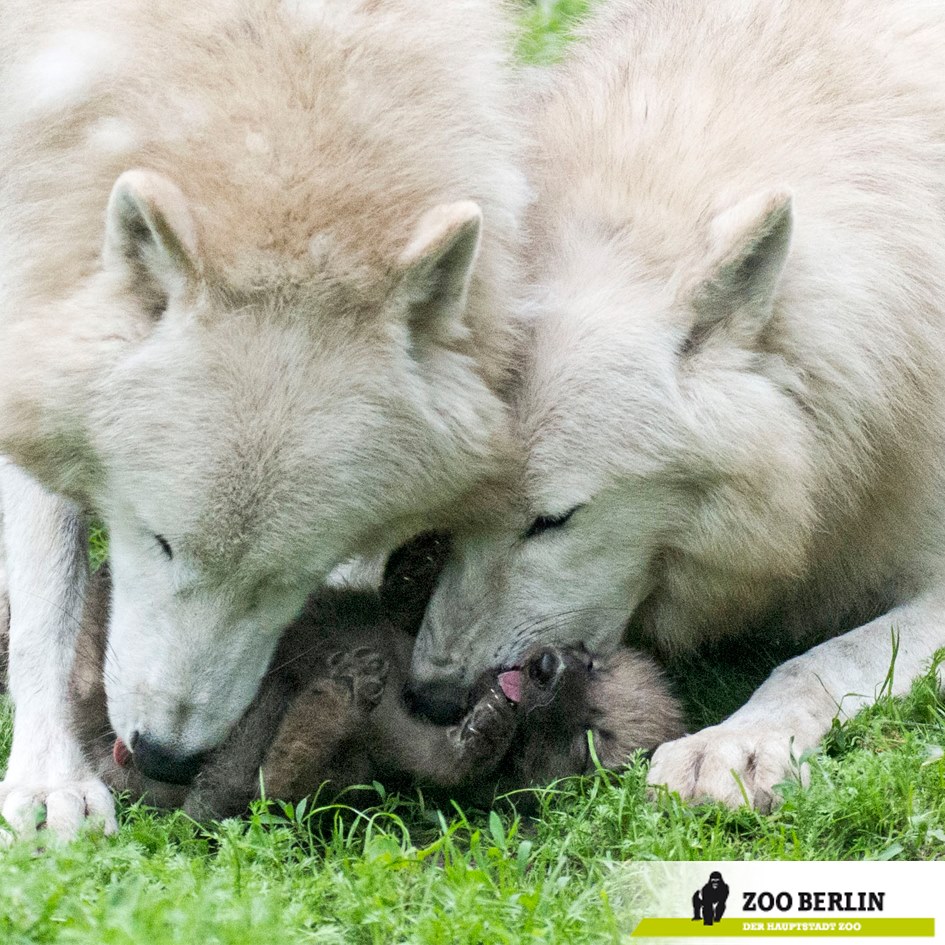
    Whose little feet are those? They belong to one of the new White Canadian Wolf pups born at Berlin Zoo. On April 29, keepers noticed that the four-year-old Ava, who had been pregnant, emerged from the wolf cave looking considerably leaner. It was not long before five pups ventured out to be seen by staff and visitors alike. They sport their puppy coat of brownish spotted fur, but in time will come to have the magnificent white coat of their parents.

    The Arctic or White Wolf inhabits the Canadian Arctic and the islands, parts of Alaska and northern parts of Greenland. All wolves in Canada are members of the species Gray Wolf (Canis lupus). Like those in the U.S., Canadian wolves can range from coal black to off-white in color, but most have a creamy white coat. The white hair shafts have more air pockets than those with pigmentation, therefore providing better insulation in a climate that at best is cool in mid-summer but can become absolutely frigid in the dark of their long winter.

    Wolves families
    Wolves pups

    Wolves 3
    Photo Credit: Berlin Zoo

    Canadian wolves are usually larger than their counterparts in the United States, an adaptation that came about because the north has much larger prey, like caribou and moose, compared to the US wolves who feed on smaller mammals. Wolf packs tend to be larger in Alaska and Canada – up to 10 or even 20 animals per pack.
  • ,

     
    Mom and pup

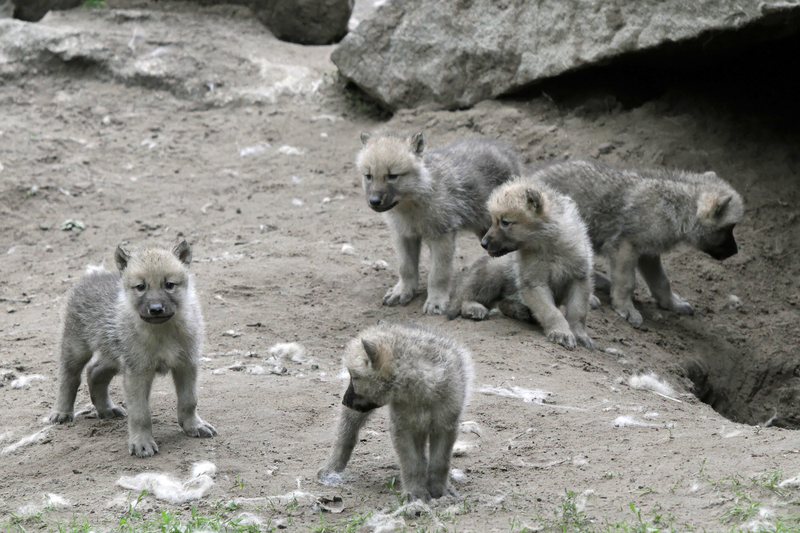
    A big event happened at Knuthenborg Safari Park at the end of April, for the second year in a row: five White Arctic Wolf pups were born to the park's four-year-old female Wolf after a gestation of 63 days. The pups have been found to be healthy and all are thriving. The sex of each pup is still unknown. Head animal keeper Lisbeth Høgh said, "This time we did not know she was pregnant when we never saw any mating."

    They have just begun to emerge from the den but have come out more and for longer periods of time each day to play and nurse. It will be awhile yet before they begin to eat with the rest of the pack. The pups will develop long canine teeth for killing and eating prey.

    Pup group grass

    Pup solo crop

    Pup nurse 1


    Pup nurse 2
    Photo Credit: Knuthenborg Safari Park

    In the wild, Arctic Wolves, also known as Snow or White Wolves are found in the Canadian Arctic, Alaska and the northern parts of Greenland. They are the only subspecies of the Gray Wolf that still can be found across its original range, because they rarely encounter human beings in their harsh, remote habitat. Not much has therefore been learned about their habits. However, this has been of benefit to them, as they are fairly safe from the encroachment of man, whether that takes the form of hunting or habitat destruction. As a result, the Arctic Wolf is also the only subspecies of wolf which is not threatened.

    Watch the little pups play in the video below:

     See more pictures after the jump:

    (more…)

  • ,

    Wolf 7 days old FB2

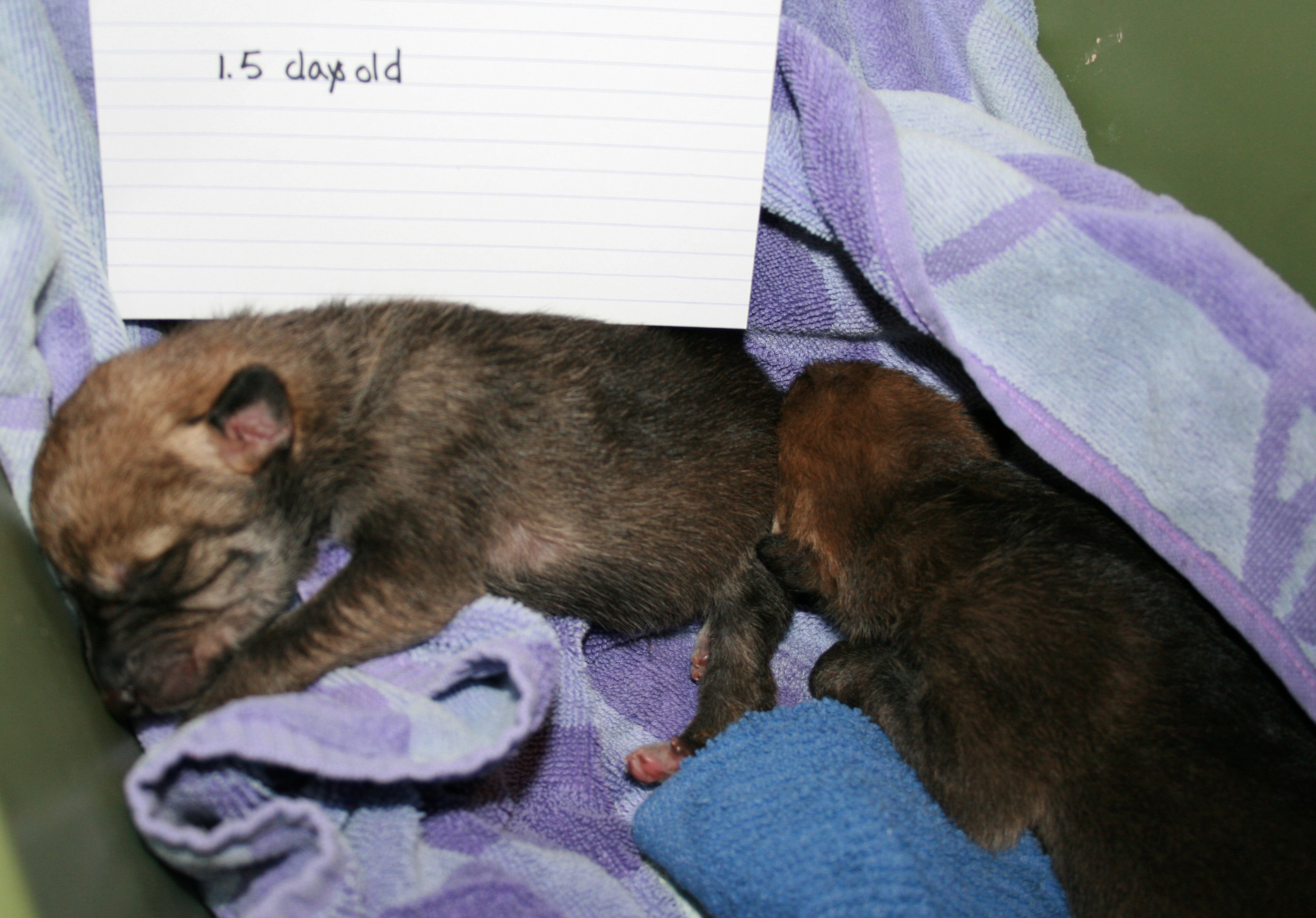
    A litter of Mexican Gray Wolves, the most Endangered wolf species
    in the world, came to the Mesker Park Zoo & Botanic Garden — and not by conventional means. They arrived on a LightHawk* flight at Tri-State Aero, Inc. and
    were immediately given into the care of zoo staff. The pups are doing well.

    Born on May 8 at the Wolf Conservation Center in New York, the pups were pulled within hours of their birth with the goal of being in the care of the Mesker Park Zoo within 24 hours. There they have experienced Wolf parents standing by. The plan is for the pups to be partially hand reared and then, within a few months, be fostered by the resident Wolf parents. This is considered their best chance for surviving and contributing to the genetics of this Endangered species.

    Wolf nurse front crop

    Wolf pup 7 days hold crop
    Photo Credit: Mesker Park Zoo & Botanic Garden

    Although their genetically important birth mother was successful with one litter in her lifetime, her other litters have been totally lost or large portions of her litters lost within the first few weeks of life. The reasons behind these deaths are not known, so the arriving litter is considered fragile by the U.S. Fish and Wildlife Service (USFWS) and Mesker staff. The decision was made to pull any pups she produced this year and foster them via an experienced pair was reached in July by the USFWS and the Mexican Gray Wolf Species Survival Plan in consultation with Dr. Susan Lyndaker Lindsey, Animal Curator at Mesker Park Zoo & Botanic Garden and Behavioral and Husbandry Advisor to the USFWS Mexican Gray Wolf Recovery Program and the Species Survival Plan.

    Read more after the fold:

    Wolf nurse 2

    Wold nurse 3

    Wolf 1.5 days crop

    Dr. Lindsey has previous experience rearing wolf pup
    litters that are not socialized to humans and fostering them to adult wolves to
    form packs.

    Selection of the initial wolf parents for Mesker Park Zoo &
    Botanic Garden was based upon the need for an experienced pair of wolves and
    the unique conservation contribution that Mesker Park Zoo & Botanic Garden could
    offer to the future of this critically Endangered wolf. The male Wolf,
    Nagual, was born on May 4, 2005 at Wild Canid Survival and Research Center in MO. On May 22, 2009, he
    was transferred to a USFWS Sevilleta Wolf
    Management Center, Sevilleta National Wildlife Refuge, NM. Dr. Lindsey fostered two orphan wild
    born pups to this male later that year. The female was born on April 22, 2007
    at the California Wolf Center near Julian, CA. She was transferred to the USFWS Sevilleta Wolf Management
    Center, Sevilleta National Wildlife Refuge, NM on Nov. 23, 2009 and
    later placed with Nagual.

    This
    pair had pups in 2010 and 2011 and raised them all successfully in a large
    pack. They have proven to be
    excellent parents.

    There are only approximately 300 Mexican Gray Wolves in captivity and 60 to 70 in the wild in Arizona and New Mexico. These wolves have also been recently released in Mexico. 

    *LightHawk
    provides donated flights for conservation related organizations and others
    working on natural resource issues. All flights are arranged through the
    generosity of LightHawk volunteer pilots. For more information about this
    nonprofit and unique group of conservationists visit:  http://www.LightHawk.org.

  • ,

    Red wolf bottle

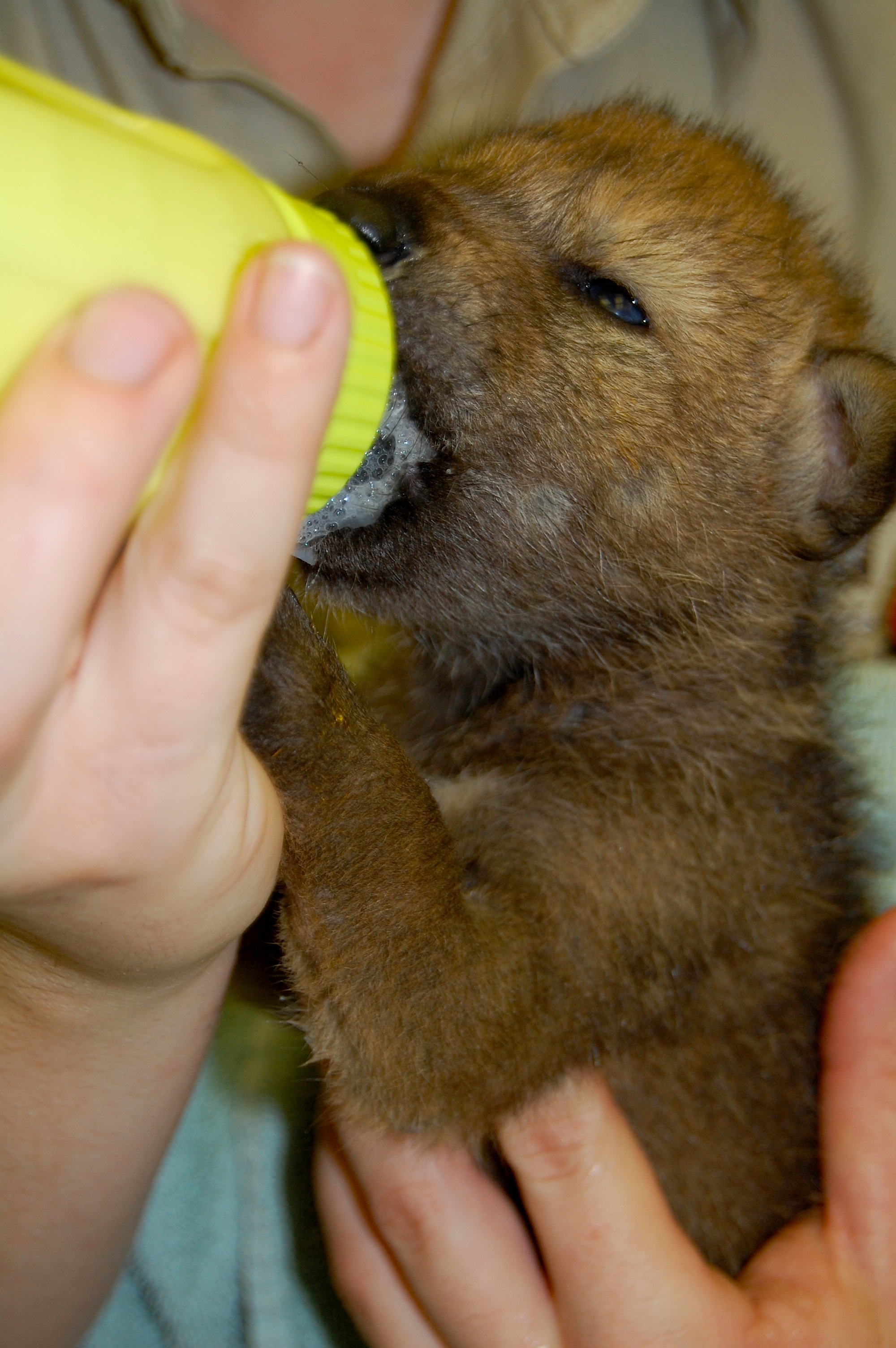
    When an aggressive virus strikes, there’s often little that can be done. Fortunately, Jackson Zoo’s dedicated animal care team was able to give the medical attention needed to rescue a litter of Red Wolf pups from a virus that had been transmitted by the pups' mother, Taladu.  

    The five pups, Jackson Zoo's first litter of this critically endangered species, were born on April 22nd. The three surviving pups are male and thriving under the care of zoo veterinarian, Dr. Michael Holifield. They are growing quickly and taking two to three ounces of formula at three-hour intervals. At three weeks old, two cubs weighed in at 2.3 lbs and one weighed in at 3 lbs. 

    Because the virus was transmitted by their mother, they will continue to be hand-raised by Dr. Holifield for a few more weeks before they return to their nursery at the zoo. 

    Red wolf pups

    Red wolf pups 2

    Red wolf 1

    Red wolf pup

    Red wolf bottle 2
    Photo credits: Jackson Zoo

    See photos of the pups as newborns and learn more about Red Wolf conservation after the fold.

    (more…)

  • Red wolf

    In
    late April, a Red Wolf pup was born
    at the U. S. Fish & Wildlife Service’s Red Wolf Recovery Program facility
    in Alligator River National Wildlife Refuge, North Carolina. Born in captivity,
    the little female was the only surviving pup of her litter. The Red Wolf
    Recovery Program has taken this opportunity to introduce the pup to a wild
    litter of pups.

    Since 2002, the Red Wolf Recovery Program has been successfully fostering pups into wild litters to help increase the genetic diversity of this critically endangered species. The attempts have been a great success: no wild wolf mother has ever been known to reject a foster pup. The survival rates of fostered pups also seem to be the same as their wild-born littermates’.

    The
    captive-born pup was introduced into a litter of two females. Conservationists worked
    quickly and carefully to remove all pups from the den while the mother was
    away. They collected blood samples to keep track of parentage and implanted a
    microchip in each pup. When the wolves are older, they will be captured for a
    radio-collar fitting, and a quick scan of the microchip will allow USF&W to identify the wolf without temporarily holding it in captivity. Once the foster pup was
    masked with the scent of her littermates’ urine, all three were returned to the
    den to wait for their mother’s return.  

    Red wolf 2

    Red wolf 3
    Photo Credits: USFWS / B.Bartel

    There are several factors that can
    determine the likelihood of successful fostering. Ideally, the pups need to be
    no older than two-weeks of age at the time of the fostering.  During this
    time, the strong maternal instinct of the mother decreases the likelihood of
    pup rejection. The pups have limited mobility at this age as well, which
    ensures they will stay in or nearby the den site and the mother.  All the
    pups need to be similar in age, to reduce any one-sided competition for
    food.  Lastly, a good potential foster mother usually has a relatively low
    number of pups in her litter, ensuring that she will be able to care for the
    new addition.

    Once common throughout the eastern and south-central
    United States, Red Wolf populations were decimated by the early part of the
    20th century as a result of intensive predator control programs and the
    degradation and alteration of the species' habitat. The red wolf was designated
    an endangered species in 1967, and shortly thereafter the U.S. Fish and
    Wildlife Service initiated efforts to conserve the species. Today, more than
    100 red wolves roam their native habitats in eastern North Carolina, and nearly
    200 red wolves are maintained in captive breeding facilities throughout the
    United States.

    Related articles

    Critically Endangered Tiger Cub Born at Point Defiance
    Alaska SeaLife Center Rehabs Baby Otter For New Home at Vancouver Aquarium
    Wolf Pup Gets a New Home in Colorado
    A Sneak Peek at Pueblo Zoo's Maned Wolf Puppies